
Prompt chaining is a technique used in AI workflows to break down a complex task into multiple smaller steps. Each step is handled by a separate AI prompt and the output from one step becomes the input for the next. This creates a logical sequence or “chain” of operations that builds toward a structured and high-quality final result.
Our system has full support for prompt chaining and we recommend using it for assessments and other products that require nuanced, context-rich output.
How Prompt Chaining Works
Step-by-step breakdown
A complex prompt is split into smaller sub-prompts, each focusing on a specific part of the task — like brainstorming ideas, refining language, or formatting content.Intermediate outputs
The output from one prompt is automatically passed as input to the next prompt in the chain. Each step improves, organizes, or builds upon the previous step.Controlled logic flow
This sequential design allows you to guide the AI through a structured thought process, much like guiding a human assistant through multiple stages of a project.
How to Execute Prompt Chaining in Productised
The easiest way to do prompt chaining in the system is by chaining between AI Writer Nodes.
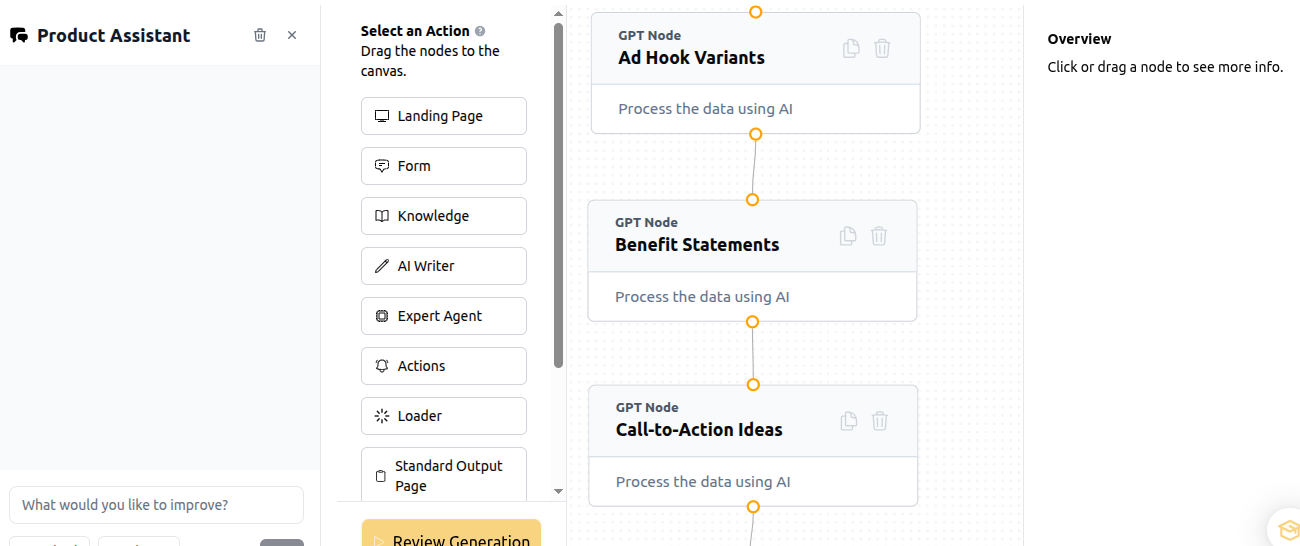
In this example Ad Hook Variants is chained with Benefit Statements and in turn Call-to-Action ideas.
The Necessary Prompt to Enable Chaining
To enable chaining between AI Writer nodes, the AI model needs clear instruction which can be provided as the 'chaining instruction' per the example below. In this example the call to action statements are created with reference to the hook lines and benefit statements previously generated, with the prompt receiving context from the output of both the previous generations:
__________________________________________________________________________
Chaining Instruction:
Draw from both the emotional appeal of {hook_variants} and the value proposition in {benefit_lines}. Your CTAs must feel like a natural conclusion to the messaging thread, reinforcing motivation and aligning with the tone and platform expectations.
Use the following input:
• Hooks: {hook_variants}
• Benefits: {benefit_lines}
• CTA Type: as specified in {form:desired_call_to_action}
• Platform specified by the form user in {form:desired_ad_platform}
• Tone specified by the form user in : {form:desired_ad_tone}
In a nutshell: Prompt chaining is ideal when you want quality, structure, and control. It's especially useful for AI products that require multi-stage thinking — like diagnostics, blueprints, or those used for onboarding.